
Two Chinese red wines, from Yunnan and Ningxia respectively, were awarded Platinum medals at the 23rd edition of the Decanter World Wine Awards (DWWA), reflecting the breadth and quality of the country's wine industry.
Yunnan and Ningxia claim Platinum medal
At the 2026 edition of DWWA, Platinum medals were awarded to just 1.18% of the 16,631 wines tasted.
For the first time, a wine from Yunnan province in Southwest China won a Platinum medal (97 points) at Decanter World Wine Awards, highlighting the growing potential of the province's high-altitude vineyards.
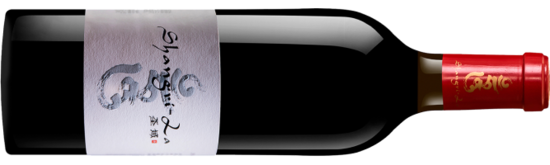
Established in 2000, Shangri-La Winery takes its name from the mythical paradise popularised by James Hilton's novel Lost Horizon. Today, it sources grapes from 126 villages scattered across the region's high-altitude valleys.
After narrowly missing Gold with its Sacred Legends Rongzhong Cabernet Sauvignon 2020, which scored 94 points at the 2025 DWWA, Shangri-La stepped up to Platinum this year with its Holy Land Cabernet Sauvignon 2019 (pictured), praised by judges for its ‘arresting’ aromas and the ‘sprightly and lofty’ palate.
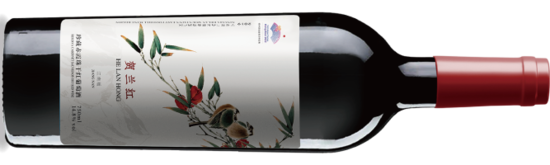 Moving north to Ningxia, Helanhong Winery's Helan Hong Jiangnan Reserva Red 2019 (pictured) claimed the other Platinum medal (97 points) won by Chinese producers at DWWA 2026.
Established in 2018 by the Ningxia government, Helanhong (‘Red from Helan’) is a state-owned wine brand producing wines via its two wineries using grapes sourced from Helan Mountain East – the foothill region known for its arid climate and abundant sunshine in inland Northwest China.
A blend of Cabernet Sauvignon, Merlot and Cabernet Franc, Jiangnan Reserva Red was praised by judges for its ‘vibrance and ardour’ in addition to its ‘lengthy and bright’ finish.
In addition to the Platinum medal, the producer also claimed a Gold medal (95 points) at this year's DWWA with the 2020 vintage of its Classic 20.
Gold medal winners from four regions
11 wines from four regions were awarded Gold medals (95 points and above) this year.
As one of the nation's most-planted wine grapes, Cabernet Sauvignon remained a dominant force behind China's top reds, with five wines – one single-varietal and four Cabernet Sauvignon-led Bordeaux blends – from Ningxia (Yuanshi Vineyard, Helanhong Winery and Renyiyuan Winery) and Xinjiang (Chateau Loulan and Citic Niya) accounting for nearly half of the Gold medal wins.
This year also saw the very first Gold medal for a wine from Inner Mongolia awarded to Tian Ge Winery’s Coviyn Desert Gift Golden Sand Blend 2023, a red blend driven by Marselan and Syrah.
A cross between Cabernet Sauvignon and Grenache, Marselan once again showcased its potential to become China’s ‘poster grape’, with two Golds awarded to single-varietal wines from Şuamgy of Helan Mountain East, Ningxia, and Tangting Xialu Winery of Yili, Xinjiang.
Cabernet Gernischt, genetically identical to Carménère, is another red grape of historical significance for the nation, and is increasingly recognised for its distinctive regional expressions compared with its Chilean counterpart, as demonstrated by the Gold medal awarded to Chateau Mihope, Enjoy Cabernet Gernischt 2023 from Helan Mountain East.
It is unsurprising that two icewines from the Huanren region of Liaoning Province in Northeast China claimed the last two Gold medals. Again, Cailonglin Jinding Icewine Vidal championed the category – this time with the 2019 vintage – extending the producer’s run of Gold medals in 2020 and from 2022 to 2025. The other Gold went to Moonbag’s Baiyue 2021, praised by judges for its ‘enchanting’ aromas.
Top regions and new frontiers
A total of 214 wines from China received a medal at DWWA 2026, including two Platinums, 11 Golds, 100 Silvers (90–94pts) and 101 Bronzes (86–89pts).
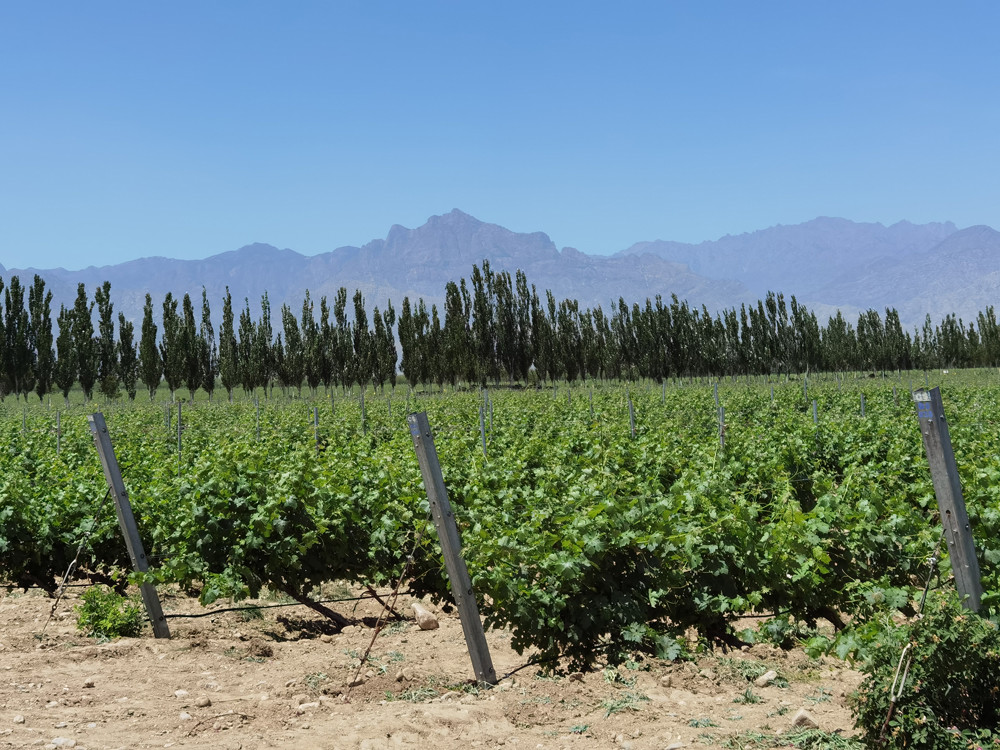
Ningxia accounted for more than half of all medals awarded to Chinese wines, securing one of the two Platinums, five of the 11 Golds, 54 Silver and 50 Bronze medals. The results further reinforce the sun-baked region's status as China's leading fine wine region.
Xinjiang ranked second with 49 medals, including three Gold, 21 Silver and 25 Bronze medals. Liaoning secured 11 medals, matching the tally of the coastal region of Shandong.
Growing consumer demand for greater diversity continues to encourage producers to explore alternative styles and grape varieties. Among the standout examples are Canaan Winery, Chapter and Verse Mastery Riesling, Huailai, Hebei 2020 (94pts) and Puchang Vineyard's Saperavi 2019 (93pts) and Rkatsiteli 2023 (91pts), both from Turpan, Xinjiang.
The highest-scoring sparkling wine this year was Devo Winery, Mv04 Brut Nature, Helan Mountain East, Ningxia NV (92pts), followed by its Blanc de Blancs Brut Nature 2022 (90pts).
Taiwan's Weightstone earned three Bronze medals, with still and sparkling wines made from the indigenous white grape Musann Blanc and the hybrid red variety Black Queen.
DWWA 2026 – the judging process
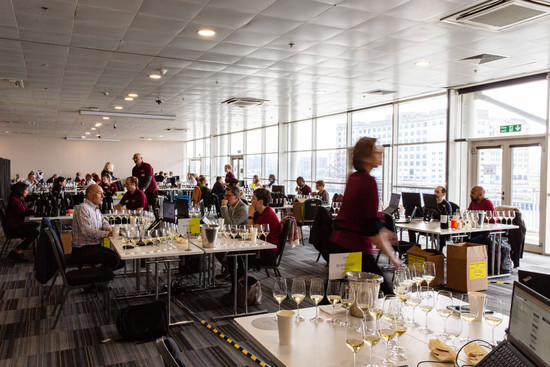
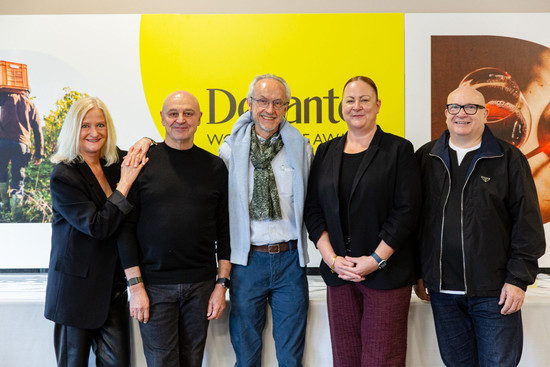
The 2026 Decanter World Wine Awards was judged in London by 245 experts from 35 countries and regions, including 24 Master Sommeliers and 63 Masters of Wine.
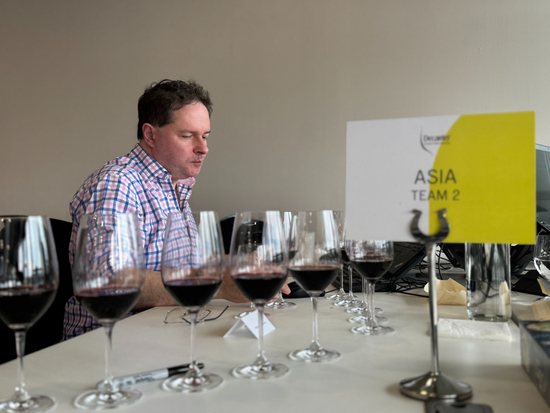
Dr Edward Ragg MW, newly appointed as Regional Chair for Asia, highlighted the ‘great diversity’ of entries from China, Japan, India, Thailand, Indonesia and Myanmar.
A total of 16,631 wines from 58 countries and regions were categorised by origin, grape variety, colour, style and price before being tasted blind by the judges.
In the first stage of judging, wines are evaluated in categorised, regional flights and awarded Gold, Silver and Bronze medals. Co-Chairs conduct a final re-tasting of all wines scoring 94 and above for final endorsement, with only Gold medal winners progressing to the next round.
During the second stage of blind tasting, Gold awarded wines are re-tasted by a panel of Regional Chairs and Co-Chairs and can be promoted to Platinum.
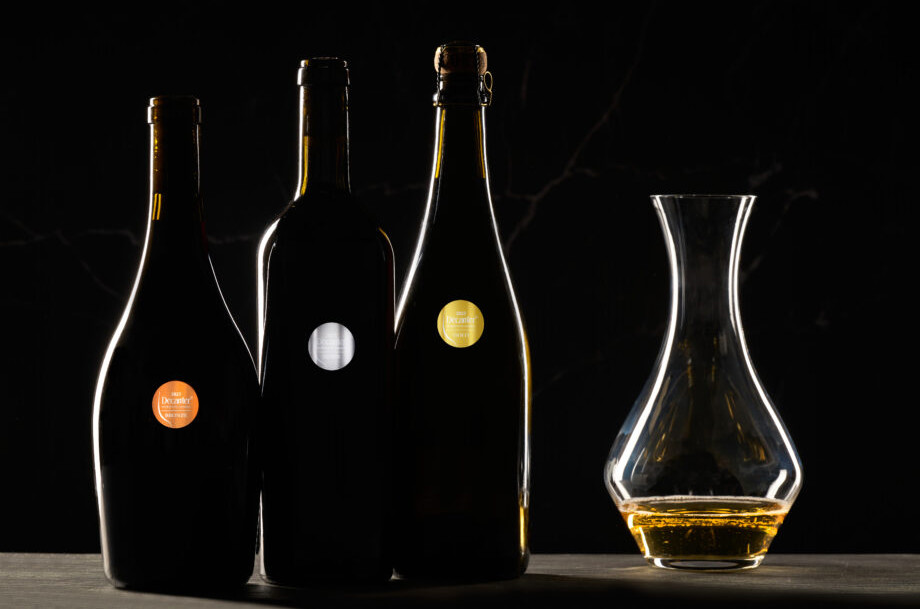
Finally, in a third round of blind tasting, the Co-Chairs select the competition's top 50 wines from the Platinum medal winners and award them Best in Show – DWWA's highest accolade. These wines represent just 0.3% of all entries tasted.
Visit awards.decanter.com for a full list of winners.
2026 DWWA: award-winning Chinese wines
2026 DWWA: Award-winning Chinese wines - Platinum and Gold
2026 DWWA: Award-winning Chinese wines - Silver (92-94 points)
2026 DWWA: Award-winning Chinese wines - Silver (90-91 points)
2026 DWWA: Award-winning Chinese wines - Bronze (88-89 points)
2026 DWWA: Award-winning Chinese wines - Bronze (86-87 points)
All rights reserved by Future plc. No part of this publication may be reproduced, distributed or transmitted in any form or by any means without the prior written permission of Decanter.
Only Official Media Partners (see About us) of DecanterChina.com may republish part of the content from the site without prior permission under strict Terms & Conditions. Contact china@decanter.com to learn about how to become an Official Media Partner of DecanterChina.com.

Comments
Submit